Utility-scale BESS + Modular PCS + GridMind AI
Utilities and IPPs need MW-scale BESS for frequency regulation, capacity firming, and renewable integration. LEONICS delivers Modular PCS 0.3-3.2 MW + GridMind AI — and, for community energy, an Ethereum-based trading platform (GEMS) proven in Thailand.
Design figures for a system sized to this use case. What a given site actually gets depends on its load shape, the PV and battery sizing and its tariff.
The Challenge
Utilities and IPPs must integrate variable renewables, firm up capacity, and even enable peer-to-peer energy trading — all while keeping the grid stable.
- Renewable variability — Solar and wind output swings constantly; without storage it destabilises the feeder.
- Peak + capacity firming — Meeting peak demand and firming reserve capacity with thermal assets alone is costly.
- Grid services needed — Frequency regulation, voltage support, and fast ramping need quick-responding assets.
- Prosumer complexity — Rooftop prosumers feeding energy back make settlement and trading complex.
- Need transparency — Manual metering can’t support fair, auditable community energy trading.
How LEONICS Solves It
Grid-scale Solar + BESS
MW-scale generation and storage for capacity firming and shifting load away from the peak.
Modular PCS
Grid-forming/following inverters that deliver frequency regulation and voltage support.
GridMind AI
Forecasts load and generation, dispatches assets, and evaluates energy procurement for best value.
Blockchain Energy Trading (GEMS)
An Ethereum-based platform lets community prosumers trade surplus energy peer-to-peer — transparent and auditable.
Who designs, makes and installs it
LEONICS Co., Ltd. manufactures the 0.3–3.2 MW Modular PCS, develops GridMind AI, and designs BESS and microgrid systems for utilities, power producers and community energy projects.
- LEONICS — manufacturer and system designer — The 0.3–3.2 MW N+1 Modular PCS, battery systems and the GridMind AI platform. Building power electronics since 1991, at its factory in Wellgrow Industrial Estate, Chachoengsao.
- Work for the Provincial Electricity Authority — PEA's Net Zero Energy Building, Nakhon Pathom (2018 — 120 kWp solar + 120 kW / 100 kWh LFP + microgrid controller) and UPS at 870 branches nationwide with a central monitoring portal (2021).
- Solar + BESS delivered by LEONICS in Thailand (commercial sites) — Designed and installed by LEONICS itself: GEMS at a Bangchak service station, Bangkok (2018 — 280.9 kW PV + 1 MWh LG lithium battery with an energy trading platform) and the PTT service-station microgrid, Pathum Thani (2015 — 520 kW PV + 3 MWh battery).
- Contact — LEONICS · Tel +66 2-746-9500 · rne@leonics.com
MW-class solar and MWh-class storage meet on the DC side and pass through one Modular PCS, which GridMind AI dispatches.
Schematic — PCS ratings and grid codes from the specifications on this page.
Key Benefits
- ✓Stable renewable integration — MW-scale BESS absorbs solar/wind swings to keep the grid steady.
- ✓Modular PCS 0.3-3.2 MW, ready to deploy — containerized with N+1 redundancy; one module failing does not stop the system.
- ✓Grid ancillary services — fast-responding frequency regulation, voltage support, and capacity firming.
- ✓GridMind AI automated dispatch — forecasts and dispatches per grid signals and energy prices.
- ✓Peer-to-peer energy trading — an Ethereum platform (GEMS) lets prosumers trade surplus energy, transparent and auditable.
- ✓Global grid-code compliant — UL1741SA / IEEE1547 for worldwide deployment.
Best For
Technical Specifications
Proven Installations
Real LEONICS deployments in this segment
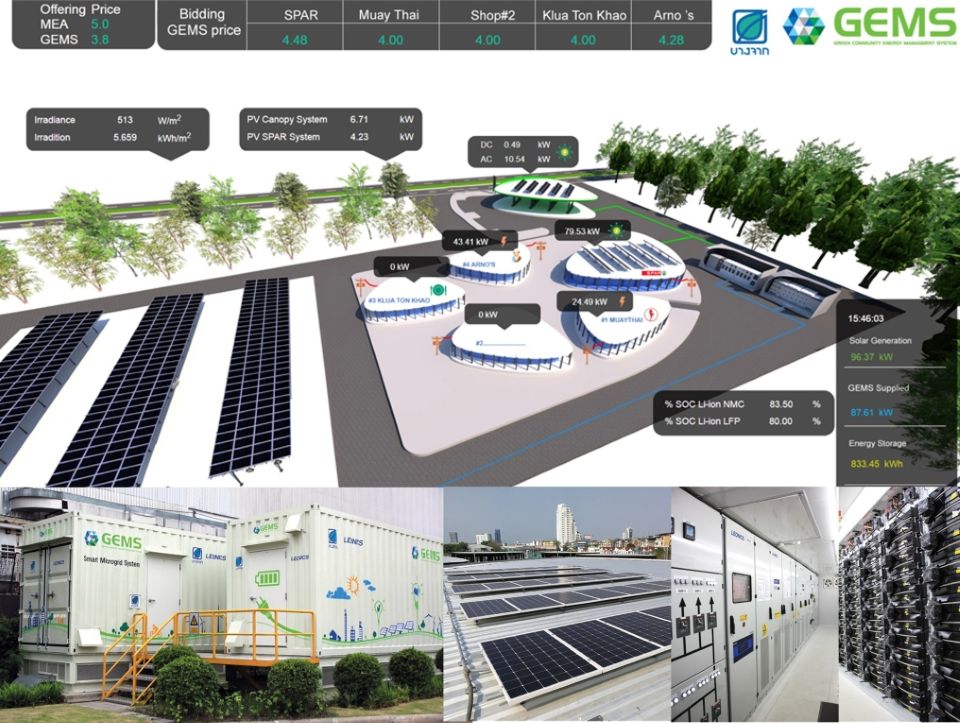
GEMS — Community Microgrid + Blockchain Trading
PV 280.9 kW + 1 MWh LG lithium battery · 1,000 kWh/day · AI + IoT + Blockchain Trading
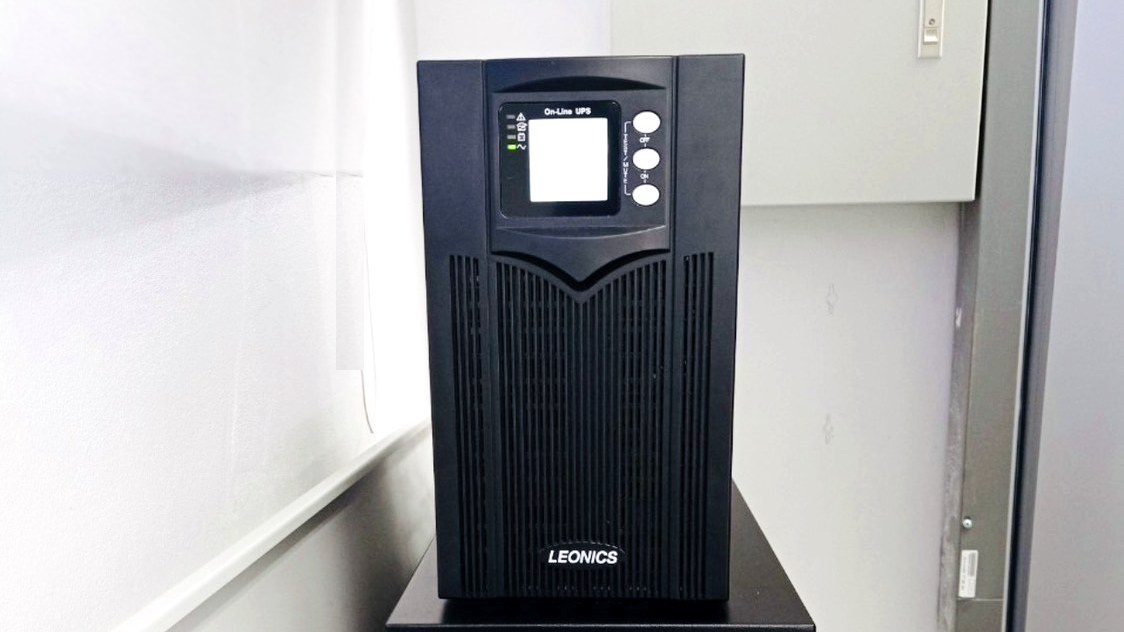
Provincial Electricity Authority (PEA) — UPS across 870 branches
UPS at 870 branches · centralized monitoring portal
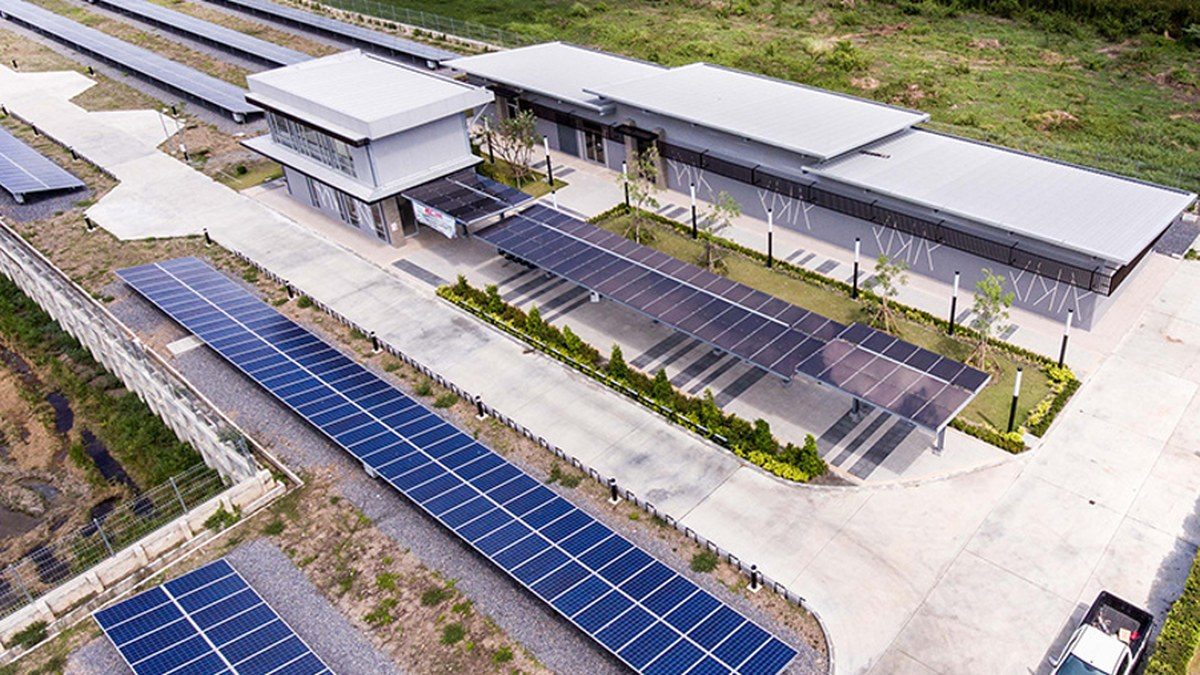
PTT Gas Station Community Microgrid
PV 520 kW + 3 MWh battery · grid as backup
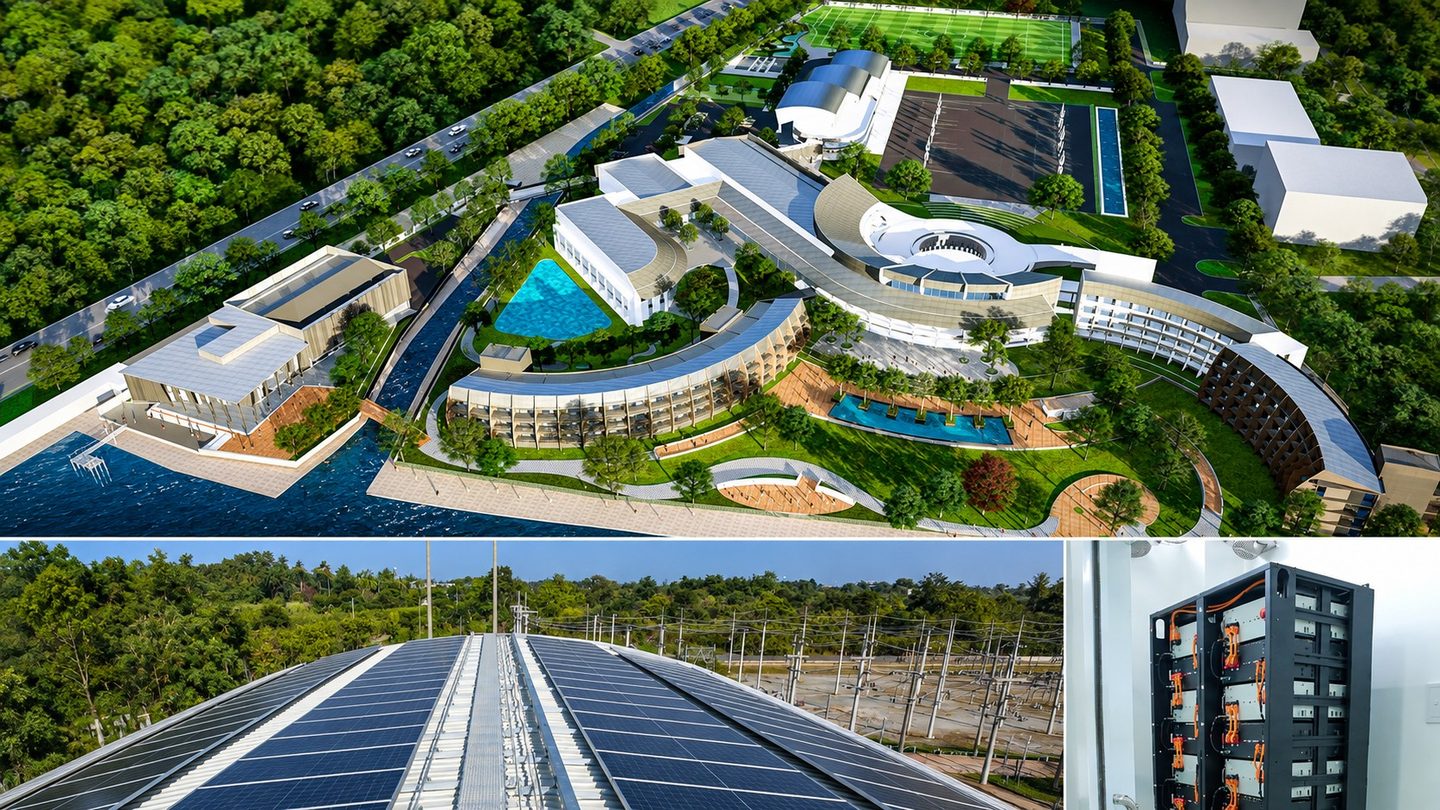
Net Zero Energy Building — PEA
Solar 120 kWp + LFP 120 kW / 100 kWh + Microgrid Controller