What is a BESS? And what is an ESS?
ESS stands for *Energy Storage System* — any system that stores energy for later use, whether in batteries, pumped water, compressed air or heat. BESS stands for *Battery Energy Storage System* — the kind built on batteries, which is what nearly every commercial and industrial installation today uses. In sales conversations, product names and tenders, "ESS", "BESS", "battery storage" and "energy storage system" almost always mean the same thing: a lithium battery system with the electronics needed to charge it, discharge it and keep it safe.
A complete BESS has four parts:
| Part | What it does |
|---|---|
| Battery modules | Store the energy. Today almost always lithium iron phosphate (LFP / LiFePO4) cells assembled into packs and racks |
| PCS (Power Conversion System) | A bidirectional inverter that charges the battery from the grid or solar and discharges it to the loads. Also called a battery inverter or hybrid inverter |
| BMS (Battery Management System) | Electronics inside the battery that monitor every cell's voltage, current and temperature, balance the cells, and stop charging or discharging outside safe limits |
| EMS (Energy Management System) | The controller that decides *when* to charge and discharge — based on the tariff, the solar forecast, the site load and the grid limit |
How a BESS works
The daily cycle of a BESS in a factory looks like this:
- Charge when energy is cheap or free — from the solar array at midday, or from the grid at the off-peak tariff at night.
- Discharge when energy is expensive or scarce — during the peak tariff hours, when the site load is about to exceed its demand limit, or when the grid fails.
- Repeat, within limits — the BMS keeps every cell inside its safe voltage and temperature window, and the EMS keeps the daily depth of discharge where the battery reaches its rated cycle life.
Lithium LFP vs NMC vs lead-acid
Battery chemistry decides the safety, lifetime and footprint of the whole system. LEONICS has built storage with all three over the decades — the 2015 Bario village microgrid in Sarawak runs on a 4.3 MWh flooded lead-acid bank, while every system delivered since the early 2020s uses LFP.
| LFP (LiFePO4) | NMC (lithium nickel-manganese-cobalt) | Lead-acid (flooded / VRLA) | |
|---|---|---|---|
| Cycle life | 6,000-8,000 cycles in LEONICS systems (to 70-80% of capacity) | Typically a few thousand cycles | Typically around 1,000-2,000 cycles |
| Thermal safety | Most stable lithium chemistry; very high thermal runaway threshold | Higher energy density but less tolerant of heat and abuse | No thermal runaway, but hydrogen off-gassing on charge |
| Energy density | Medium | Highest — the choice for electric vehicles | Lowest — largest footprint per kWh |
| Cobalt | None | Yes | None |
| Usable depth of discharge | 80-90% daily | 80-90% daily | Usually limited to about 50% to protect life |
| Typical use today | Stationary storage — factories, buildings, microgrids | EVs; some stationary systems | Small off-grid and telecom sites, legacy systems |
What a BESS is used for
1. Peak shaving — cutting the demand charge
Thai industrial tariffs bill the highest 15-minute demand of the month in kW, on top of the energy in kWh. A BESS discharges during those minutes so the meter never sees the peak. This is the application with the shortest payback for most factories — read the full guide to reducing the factory demand charge with peak shaving. A LEONICS EMS installation in Thailand in 2025 does exactly this with a 200 kW PCS and a 200 kWh battery: it holds grid import below the demand limit, charges off-peak, discharges at peak and blocks reverse power flow.
2. Time-of-use shifting
Charge at the night off-peak rate, discharge during the day peak rate, every day. The saving is the tariff difference times the energy shifted; it stacks with peak shaving because the same battery does both.
3. Backup power — UPS-grade, but for the whole plant
A BESS with a fast static transfer switch takes over when the grid fails. In the LEONICS C&I All-in-One ESS the built-in STS transfers in under 10 ms, so no separate ATS is needed, and it works together with a generator. Hospitals, data centres and continuous-process plants use this to replace or supplement a diesel genset — see the hospital backup solution.
4. Solar self-consumption and export limits
Factories that close on weekends, or whose solar array is larger than their midday load, waste solar energy or are barred from exporting it. A BESS stores the surplus for the evening and lets the array be oversized: the All-in-One ESS accepts a 2:1 DC/AC ratio.
5. Microgrids and off-grid sites
In an island or village microgrid the battery is the backbone that carries the evening and night load and lets the diesel genset stay off. How that fits together is explained in What is a microgrid system?
How big a BESS do you need?
Sizing starts from the site's 15-minute load profile and the tariff, not from a rule of thumb. The short version:
- Peak shaving: power (kW) = the peak you want to remove; energy (kWh) = that power times the number of hours the peak lasts, plus a margin for depth of discharge.
- Backup: power = the critical load; energy = critical load times the required autonomy hours.
- Solar self-consumption: energy = the daily surplus you want to shift into the evening.
Safety, cooling and where it can be installed
- Cooling. Air cooling is simple and fine for small indoor systems. Liquid cooling circulates coolant through the packs and holds the cells at a more even temperature, which is why outdoor and high-cycling systems use it — the LEONICS 261 kWh cabinet uses internal-cycle liquid cooling.
- Fire protection. Commercial systems carry gas or aerosol suppression inside the cabinet and, in the All-in-One ESS, a two-stage fire protection scheme. Combined with LFP chemistry, this is what makes indoor and rooftop installation acceptable to insurers.
- Outdoor rating. Look for the ingress protection and the temperature range. The All-in-One battery cabinet is IP54 with C4 anti-corrosion and runs from −30°C to +50°C; the 261 kWh cabinet runs to +55°C and up to 4,000 m altitude.
- Footprint. A 261 kWh liquid-cooled cabinet occupies 1.35 m² and weighs under 2.7 tonnes — a parking-space-sized pad holds a megawatt-hour.
Real BESS installations by LEONICS
| Year | Site | Battery |
|---|---|---|
| 2016 | Iririki Resort island microgrid, Vanuatu | BESS 2,000 kWh with PV 710 kW and a 1,000 kW diesel genset |
| 2018 | PEA Net Zero Energy Building, Nakhon Pathom | LFP 120 kW / 100 kWh with 120 kWp solar |
| 2024 | MaesamphengTai village microgrid, Thailand | LFP 100 kW / 200 kWh with 60 kWp solar, PEA SCADA control |
| 2024 | UNHCR site, Takum, Nigeria | LFP 50 kW / 72 kWh with PV and a DC generator, running inverter-led |
| 2025 | LEONICS EMS peak shaving + time-shift, Thailand | 200 kW PCS with a 200 kWh battery on an industrial grid connection |
| 2025 | Koh Tao renewable microgrid, Surat Thani | LFP 120 kW / 160 kWh with 60 kWp solar and a 100 kW wind turbine |
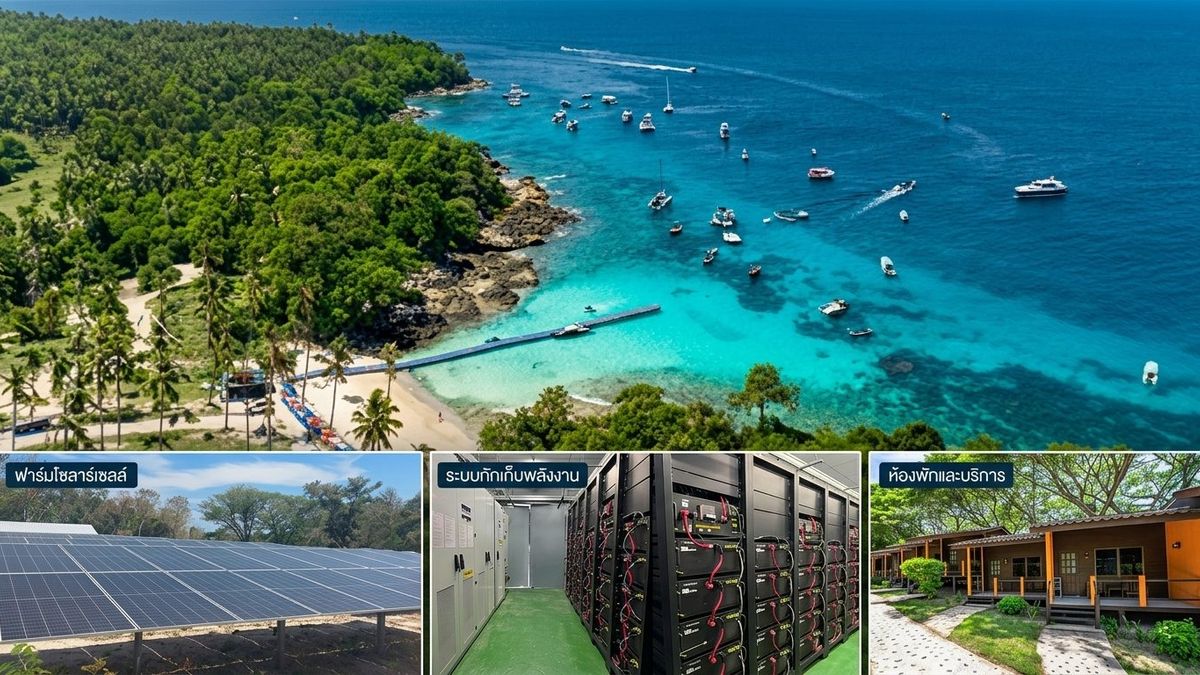
| 2025 | Ban Raya Resort, Racha Island, Phuket | LFP 250 kW / 430 kWh with 280 kWp solar |
Frequently asked questions
Is there a difference between BESS and ESS?
ESS is the general term for any energy storage system; BESS specifically means one built on batteries. Since practically every commercial storage system today is battery-based, the two terms are used interchangeably.What does LiFePO4 mean, and is it safe?
LiFePO4 — lithium iron phosphate, or LFP — is the lithium chemistry with the most stable cathode. It has a much higher thermal runaway threshold than NMC, contains no cobalt, and is the standard for stationary storage. Commercial cabinets add a BMS, fire suppression and temperature control on top.How long does a lithium BESS last?
LEONICS LFP systems are rated for 6,000 to 8,000 cycles. At one full cycle a day that is over 16 years in theory; in practice the cabinet is designed for a 10-year performance warranty, after which it still holds 70-80% of its capacity.Does a BESS need solar?
No. A BESS on its own does peak shaving, time-of-use shifting and backup from the grid alone. Adding solar gives it free energy to store and usually improves the payback.Can a BESS be installed outdoors?
Yes, if the cabinet is rated for it. Outdoor cabinets are IP54 or better, have anti-corrosion coatings and run across a wide temperature range; the LEONICS 261 kWh liquid-cooled cabinet is built for outdoor installation from −30°C to +55°C.What size BESS does a factory need?
It depends on the load profile and tariff, but the LEONICS All-in-One packages span 20 kW / 221 kWh to 125 kW / 522 kWh per unit, and up to 20 units run in parallel. A 15-minute load profile from the utility meter is enough for LEONICS engineers to size it.Summary
A BESS is a lithium battery, a bidirectional inverter, a battery management system and an energy management system working as one product. With LFP chemistry it lasts 6,000-8,000 cycles, tolerates the Thai climate and can be installed indoors or out. Factories use it to cut the demand charge and shift energy to cheaper hours; buildings and hospitals use it as whole-site backup; islands and villages use it as the backbone of a microgrid.
See the C&I All-in-One ESS, the BESS 261 kWh liquid-cooled cabinet, the Modular PCS, or send your load profile for a sizing proposal.