What is a solar cell?
A solar cell, or photovoltaic (PV) cell, is a device made of semiconductor material — overwhelmingly silicon today, with cadmium telluride and other compounds in thin-film products — that converts sunlight directly into electricity. When light is absorbed, the cell releases free electrons and holes at its positive/negative junction. Connect the two sides of the cell to a DC load and a current flows.
Solar energy is renewable: it is replenished every day for as long as the sun shines. Using it is also a form of energy conservation, because it displaces fuel that would otherwise be burned. This guide covers the cell itself, the modules built from it, and what turns a stack of modules into a working power system. It is the updated edition of the LEONICS "Basics of Solar Cell" support guide that engineers and students have used since 2009.
How a solar cell works
A silicon solar cell is a large-area p-n junction: a thin layer of n-type silicon (extra electrons) on top of p-type silicon (extra holes). Where the two layers meet, an internal electric field forms.
- Sunlight strikes the cell and photons with enough energy knock electrons loose, creating electron-hole pairs.
- The junction field separates them — electrons are swept into the n-layer, holes into the p-layer.
- A circuit closes the loop. Free electrons flow out of the n-side, through the load, and back to the p-side to recombine with holes. That flow is the direct current the cell delivers.
From cell to module to array
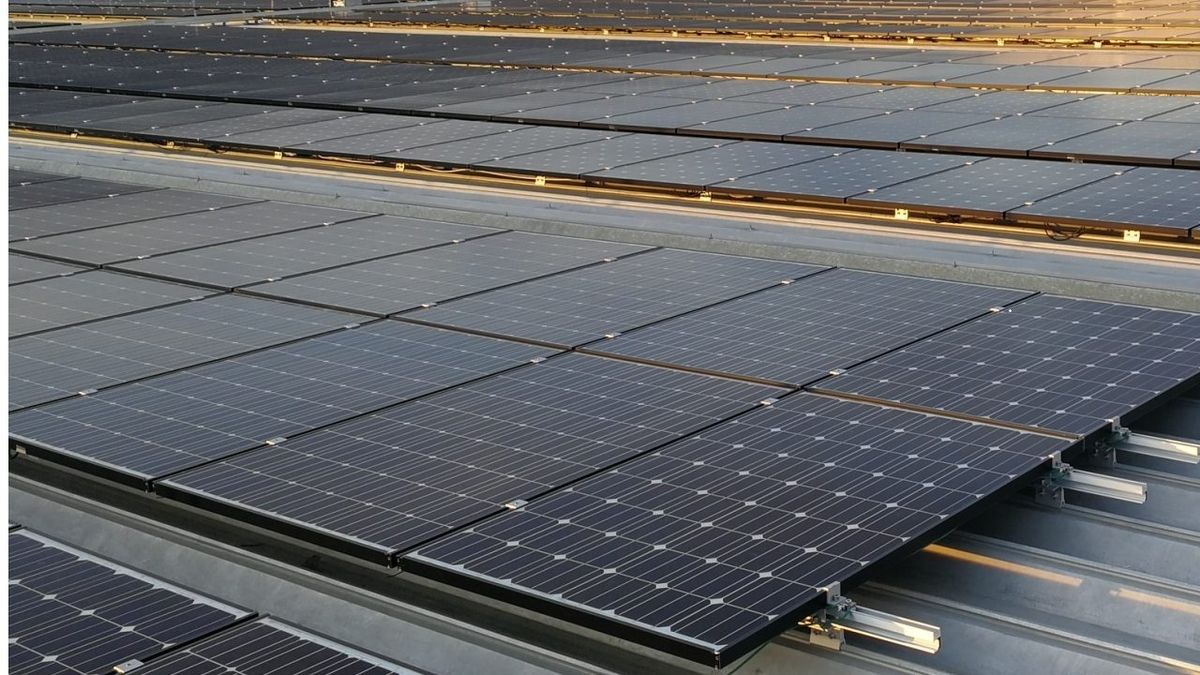
- Cell → module. Cells are connected in series inside a laminated, glass-covered frame called a solar module or PV module (often just "panel"). A typical module today has 108-144 half-cut cells and is rated 400-600 Wp at a maximum-power voltage of roughly 40-50 V.
- Module → string → array. Modules wired in series form a string with higher voltage; strings wired in parallel add current. The complete set is the PV array.
- Series connection increases voltage (currents stay the same).
- Parallel connection increases current (voltage stays the same).
Solar cell and module types
| Type | Typical module efficiency (2026) | Where it fits |
|---|---|---|
| Monocrystalline silicon (PERC, TOPCon, HJT) | ~21-23% | The standard for rooftops, solar farms and hybrid systems — highest output per square metre |
| Polycrystalline (multi-crystalline) silicon | ~17-19% | Older installations; largely replaced by mono in new projects |
| Thin-film (amorphous silicon, CdTe, CIGS) | ~10-18% depending on technology | Building-integrated glass, flexible or lightweight applications, some utility-scale CdTe |
What a solar PV system needs besides modules
Solar cells produce direct current (DC). For AC appliances, for storage, or for feeding the grid, a PV system needs more components. Which ones depends on the system type:
| Component | Function | System types |
|---|---|---|
| PV modules | Convert sunlight into DC electricity | All |
| Inverter | Converts DC to AC for appliances or for export to the grid; in hybrid form also manages a battery | Grid-tied, hybrid, off-grid |
| Solar charge controller | Regulates the array's voltage and current into the battery; prevents overcharge and over-discharge — see MPPT charge controller basics | Off-grid DC systems, solar home systems |
| Battery (BESS) | Stores daytime energy for night and cloudy periods; today almost always lithium LFP — see BESS and ESS explained | Hybrid, off-grid |
| Lightning and surge protection, earthing | Protects the array and electronics from lightning-induced surges; mandatory on large and critical systems | All, especially large arrays |
| Monitoring / EMS | Measures production, detects faults, and in hybrid systems decides when to charge, discharge or export | Recommended on all commercial systems |
Advantages of solar cells
- Clean generation. No fuel other than sunlight, no exhaust, no combustion — solar displaces the carbon monoxide, sulphur dioxide, nitrogen oxides and CO₂ of fuel-burning plants.
- No moving parts. Nothing wears out mechanically; maintenance is mostly cleaning and periodic electrical inspection.
- Long life. Modules carry 25-30-year performance warranties and keep working beyond that with gradually reduced output.
- Modular. A system can be as small as a single module on a telecom pole or as large as a solar farm, and can be extended later.
- Quick to install and transportable. Modules are shipped and installed in days, which matters most in remote areas.
- Falling cost. Module prices have dropped by more than 90% since this guide was first published, which is why solar is now the cheapest new generation in most of the world.
Where solar cells are used
| Application | Examples |
|---|---|
| Homes and buildings | Rooftop systems, lighting, water pumps, security systems, ventilation, emergency lighting |
| Public lighting | Street lights, bus stops, billboards, parking areas |
| Water pumping | Drinking water, livestock, irrigation, agriculture, mining — see the solar pump inverter |
| Agriculture and aquaculture | Pumps, sprayers, dryers, aeration for fish farms, insect-trap lighting |
| Health centres | Vaccine refrigerators and medical equipment in off-grid clinics |
| Telecommunications | Repeater stations, base stations, weather stations — see the telecom solar hybrid solution |
| Navigation and signalling | Lighthouses, beacons, aviation warning lights, railway signs |
| Remote areas | Islands, highlands, forests and villages without a grid — see microgrids explained |
| Space | Satellites and spacecraft, where PV was first commercialised |
Frequently asked questions
What is the difference between a solar cell, a solar module and a solar panel?
A cell is the single semiconductor device; a module (or panel) is a sealed unit of many cells wired in series; an array is a group of modules wired together to reach the voltage and current a system needs.What material are solar cells made of?
Almost all commercial cells are crystalline silicon. Thin-film cells use amorphous silicon, cadmium telluride (CdTe) or copper-indium-gallium-selenide (CIGS). Silicon dominates because it is abundant, non-toxic and stable for decades.How efficient is a solar cell?
Commercial monocrystalline modules reach roughly 21-23% today; laboratory cells exceed 26%. Efficiency matters most when roof area is limited — otherwise cost per watt is the deciding number.Do solar cells work on cloudy days?
Yes, at reduced output. Diffuse light still generates power, typically 10-25% of full-sun output under heavy cloud. Battery storage or a grid connection covers the gap.How long do solar modules last?
Manufacturers warrant 25-30 years of performance, usually to 80-87% of rated output at the end of the period. Modules from the 1990s are still producing today.Can I connect solar cells straight to my appliances?
DC appliances can run from a charge-controlled battery. AC appliances need an inverter. Never connect an array directly to a battery without a charge controller — the battery will be overcharged.Summary
A solar cell is a silicon p-n junction that turns light into DC current; modules stack cells to a useful voltage, arrays stack modules to a useful power, and inverters, controllers, batteries and protection turn the array into a system. Module efficiency has risen from 17% to over 22% since the first edition of this guide, and the applications have grown from remote lighting to gigawatt solar farms.
Continue with how to design and size a solar PV system, or see the LEONICS solar PV system and solar rooftop solutions.